

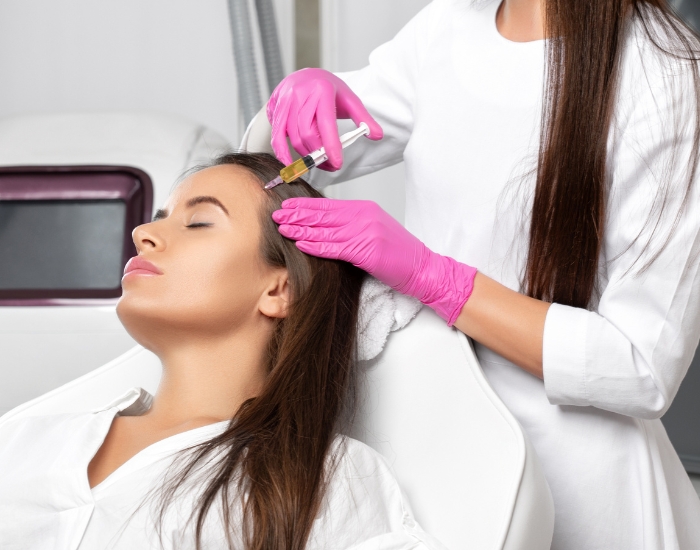
Hair loss is a common concern for both men and women, and many people search for solutions that can improve hair thickness without major surgery. One popular option is PRP good for hair loss, which stands for platelet-rich plasma therapy. PRP uses your own blood to stimulate hair follicles, encouraging stronger growth and reducing shedding. Many patients choose PRP because it is minimally invasive and uses natural growth factors from the body. In this article, we’ll explore how PRP works, who it helps most, what to expect during treatment, and whether PRP is a good option for your hair loss concerns.
Table of Contents
- What Is PRP Therapy?
- How PRP Works for Hair Loss
- Who Is a Good Candidate for PRP Hair Treatment?
- What to Expect During PRP Treatment
- PRP Results and Timeline
- Alternative Hair Loss Treatments
- FAQs
- Final Thoughts
1. What Is PRP Therapy?
PRP stands for platelet-rich plasma, which is a concentrated form of your own blood that contains growth factors and healing proteins. During a PRP session, a small amount of blood is drawn and placed in a centrifuge to separate the platelets from the rest of the blood components. The concentrated platelets are then injected into the scalp in areas where hair is thinning. Because PRP uses your own blood, it is considered a natural treatment and has a lower risk of allergic reactions or complications compared to other procedures.
2. How PRP Works for Hair Loss
PRP works by stimulating hair follicles and improving blood supply to the scalp. Platelets contain growth factors that help activate dormant hair follicles and support new hair growth. When injected into the scalp, PRP can increase the thickness of hair shafts, improve hair density, and reduce hair shedding. It also helps strengthen the hair roots, which may slow down the progression of hair loss. While PRP is not a cure for hair loss, it can be a valuable part of a long-term hair restoration plan when combined with other treatments.
3. Who Is a Good Candidate for PRP Hair Treatment?
PRP is most effective for individuals in the early to middle stages of hair loss, when hair follicles are still alive but weakened. It is often recommended for people with androgenetic alopecia (male or female pattern baldness), diffuse thinning, or early signs of hair loss. PRP may be less effective for people with advanced baldness or completely inactive follicles, as there may not be enough viable follicles to stimulate. Additionally, PRP is not recommended for individuals with certain medical conditions such as blood disorders, active infections, or those taking blood-thinning medications. A consultation with a qualified specialist is essential to determine if PRP is the right option for your hair loss.
4. What to Expect During PRP Treatment
A PRP hair treatment session typically takes about 45 to 60 minutes. The process includes drawing a small amount of blood, processing it in a centrifuge, and injecting the PRP into the scalp. Most patients experience minimal discomfort, and a topical numbing cream may be applied to reduce pain. After treatment, you may experience mild redness or swelling at the injection sites, but this usually subsides within a day or two. Many people can return to normal activities immediately after the session.
5. PRP Results and Timeline
PRP results are gradual and typically appear over several months. Many patients begin to notice reduced shedding and improved hair thickness within 3 to 6 months after starting treatment. A series of sessions is usually recommended for optimal results, often spaced 4 to 6 weeks apart. Maintenance treatments may be needed every 4 to 6 months to sustain results. It’s important to remember that results vary depending on individual factors such as age, genetics, and the severity of hair loss.
6. Alternative Hair Loss Treatments
While PRP is a popular option, there are other effective hair loss treatments to consider. Topical minoxidil is a widely used over-the-counter treatment that helps stimulate hair growth and slow hair loss. Oral finasteride is another common option for men, which works by blocking the hormone that contributes to hair loss. For more advanced hair loss, hair transplant surgery may provide a long-term solution. Lifestyle changes, such as improving diet, reducing stress, and avoiding harsh hair styling, can also support hair health and prevent further thinning.
7. FAQs
Q1: Is PRP good for hair loss in women?
A1: PRP can be effective for women with early hair thinning or pattern hair loss. It works best when hair follicles are still active and not fully dormant.
Q2: Is PRP good for hair loss results after 3 months?
A2: Many patients notice reduced shedding and early signs of thicker hair after about 3 months, with full results appearing around 6 months.
Q3: Is PRP good for hair loss compared to minoxidil?
A3: PRP and minoxidil can be used together for better results. Minoxidil is a daily treatment, while PRP provides periodic stimulation of hair follicles.
Q4: Is PRP good for hair loss if I have genetic baldness?
A4: PRP may help slow genetic hair loss and improve density, especially in early stages, but it may not fully reverse advanced baldness.
Q5: How many sessions of PRP are needed for hair loss?
A5: A typical PRP plan includes 3 sessions spaced 4 to 6 weeks apart, followed by maintenance treatments every few months.
8. Final Thoughts
PRP can be a valuable option for many people dealing with hair loss, especially in the early stages. While it is not a cure, PRP good for hair loss offers a natural, minimally invasive way to stimulate hair follicles and improve thickness. The best results usually come from combining PRP with other treatments and a healthy hair care routine. Consulting a qualified specialist is the best way to determine whether PRP is a suitable option for your specific hair loss type and goals.
If you’re considering PRP for hair loss, CoCo Medical Spa can help evaluate your condition and recommend the most effective treatment plan for your needs.
Disclaimer: This article is for informational purposes only and does not replace medical advice. Consult a qualified healthcare professional before starting any treatment.